

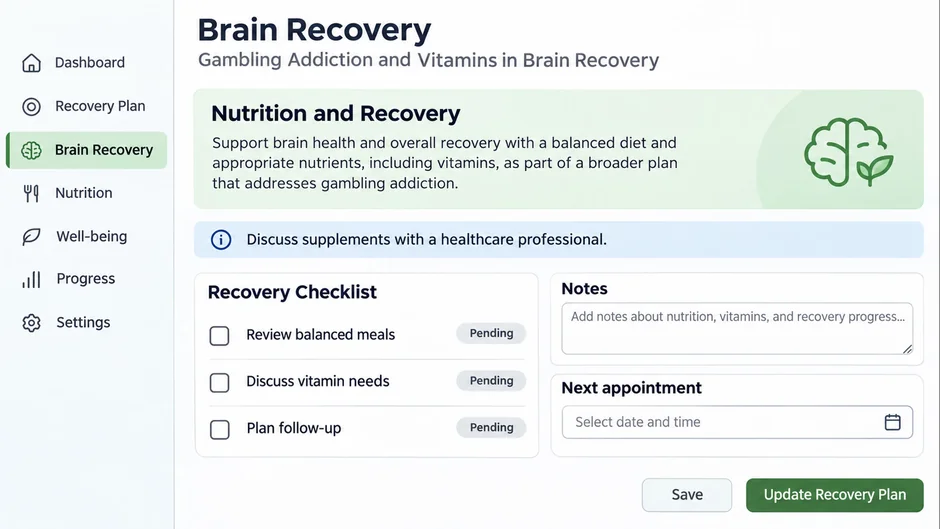
Gambling addiction is a recognized mental health condition, not a character flaw. It can lead to repeated betting despite financial losses, damaged relationships and attempts to stop. B vitamins, magnesium and omega-3 fatty acids support normal body functions, but none is an established treatment for gambling disorder.
Recognizing the signs of gambling addiction
When you open the Diagnostic and Statistical Manual of Mental Disorders (DSM-5-TR) — the mental health diagnostic tool widely used by health professionals in the U.S. — you will find that gambling disorder is categorized as a behavioral addiction. Like substance addictions, it is included within a group of mental health issues relating to loss of control. As noted in the American Family Physician journal, gambling disorder is characterized by an individual’s persistent inability to control their gambling behavior and the financial and emotional effects that this has on themselves and those around them.
While there is often variation in an individual’s gambling behavior, commonalities exist. People establish rules for themselves, but then frequently fail to adhere to them. Funds that would typically be used for housing costs, for example, are spent on gambling. Despite realizing the negative impact of their behavior, individuals often continue to gamble. Again, although there is variety in people’s experiences, this common theme of failing to follow self-imposed gambling rules and continuing to gamble despite increasing financial losses is frequently identified.
Typical indicators are:
- Increasing the amount of money gambled to achieve the same thrill
- Experiencing a sense of agitation or unease when attempting to reduce or cease gambling behavior
- Gambling further in an attempt to recoup money that has been lost
- Providing false information or concealing information from family members regarding the extent of one’s gambling behavior.
However, none of this can be used to diagnose gambling addiction. Only a trained health professional can determine if an individual fulfils the criteria for the disorder, and there is no substitute for a person-to-person discussion in this regard.
How problem gambling affects daily life
While the impact of gambling can certainly extend to a person’s finances, it can also significantly affect their general health. Problem gamblers often cite high stress levels, poor sleep, and issues with mental health. Relationships can also suffer with partners, employers, and friends. As debts accumulate, so too does the stress that accompanies debt repayment. In turn, this can lead to renewed gambling behavior. Usually, external assistance is required to break this cycle. Early identification, at a point where the impact of gambling is still controllable, often facilitates greater willingness and ability to access such assistance.
The brain's reward system and the limits of nutrition science
While the slot machine is spinning, the brain’s reward mechanism — a network of brain structures which respond to rewarding stimuli — is already in operation. Investigation into gambling disorder has shown that the brain areas activated in anticipation of winning money share similarities with those activated by substance addictions. This is why self-control is seldom sufficient to overcome gambling addiction. Suggestions to ‘just stop’ gambling therefore fail to recognize this. Essentially, the brain has learned to associate gambling with reward and so behavior must generally be re-programmed under the guidance of professionals.
Nutritional information requires sensitive handling. The brain does indeed require a constant supply of particular nutrients. Long-term lack of specific vitamins and minerals can influence a person’s mental health and stress response. However, there is no evidence to suggest that taking nutritional supplements can alter the brain’s reward mechanism or reduce a person’s gambling behavior. Although food can contribute to good general health, therapeutic intervention is required to address behavior. Consequently, nutritional science is part of general health care and is not used in the therapeutic treatment of mental health issues.
What experts say about stress and nutrients
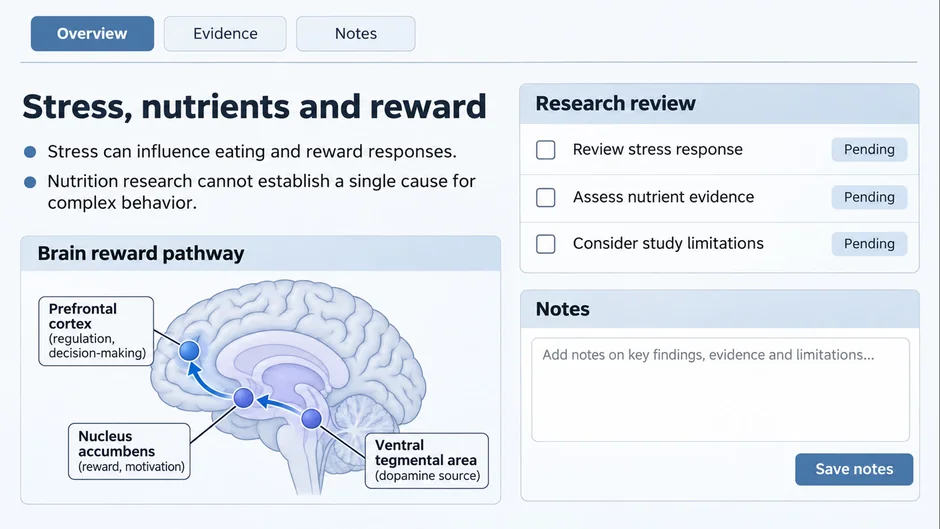
There is no universal consensus within the health profession about the relationship between stress, nutrition, and recovery. The following is an expert’s view and is not necessarily evidence-based. Furthermore, although it is claimed that stress associated with gambling can swiftly cause a person’s body to become deficient in B vitamins, there is as yet no published evidence to substantiate this. Indeed, NIH researchers highlight that a deficiency in vitamin B12 can develop over a period of years.
"Chronic gambling rewires the brain's reward circuitry in ways that closely parallel substance addictions. When someone experiences ongoing stress from financial losses, their body rapidly depletes essential micronutrients and B vitamins. Correcting these deficiencies will not cure the disorder on its own, yet it restores the physical resilience needed for effective therapy."
Bear in mind that, While the initial statement is well evidenced, the latter part of this expert’s comment is based upon his clinical observations and has not been verified by research to date.
Nutrients that support brain and nervous system health
Fish, eggs, nuts and green leafy vegetables are all good sources of nutrition. The majority of nutrients that the nervous system, red blood cells, and cell membranes require can be obtained from food. Information about the contribution of different nutrients is detailed within consumer fact sheets provided by the National Institutes of Health Office of Dietary Supplements. Note that in addition to vitamins, omega-3 is a fat and magnesium is a mineral, so the relevant nutritional category is wider than just vitamins.
| Nutrient | Common food sources | Established role in the body |
|---|---|---|
| 🥦 Vitamin B12 | Fish, meat, eggs, dairy products, fortified foods | Supports red blood cell formation and the health of the nervous system |
| 🥜 Magnesium | Nuts, whole grains, legumes, leafy greens | Contributes to normal muscle and nerve function |
| 🐟 Omega-3 fatty acids | Fatty fish such as salmon, plus some plant sources | Support the structure of cell membranes throughout the body |
Why food sources come first

Most people consume a wide range of foods and so are likely to already be obtaining the relevant nutrients from their diets. The NIH fact sheets specifically emphasize food as a source of nutrition. Furthermore, they highlight that there are risks in taking supplements and, in particular, advise against this unless a deficiency has been formally identified. Good dietary practice is fundamental to good general health. In turn, good general health underpins a person’s energy and stability and is essential for involvement in any therapeutic or recovery-related activity.
Discussing deficiencies and supplement safety with a doctor
Common symptoms of B12 deficiency include tiredness, poor mood, and hand tingling. Additional complications can include anemia and neurological issues. However, because these symptoms are also seen in numerous other conditions, it is not reliable for an individual to self-diagnose. These are then analyzed by a physician who has access to a patient’s full medical information in the United States.
While ‘over the counter’, supplements are not necessarily risk-free. Surplus magnesium can cause diarrhea and also inhibit the effectiveness of some antibiotics. Similarly, omega-3 can interact with medication. Again, taking high levels of supplements without medical supervision presents unnecessary risk and there is no proven benefit to doing so. Checking supplement labels and informing a physician of existing supplements being taken reduces the likelihood of adverse interactions occurring.
Generally, the process for an individual to investigate their nutritional health is as follows:
- Note symptoms, diet and current supplements.
- Discuss these with, and seek the advice of, a health professional. Ask whether medical investigation is suitable.
- Only implement advice given by a health professional. Do not self-prescribe high-level supplements.
- Attend for further discussion to evaluate the impact of any interventions.
As previously mentioned, only a health professional can properly analyze the potential for supplementary interactions and assess suitable levels and individual risk factors.
Treatment and support options for gambling addiction
There are effective therapies for gambling addiction. However, again, vitamins are not involved. Cognitive behavioral therapy (CBT) is highly researched and assists individuals to recognize the thinking which underpins their gambling behavior and to then devise strategies to modify this behavior. Motivational interviewing is also shown to be of short-term benefit.
Prescription medication is a matter for a doctor to handle. Nevertheless, there is currently limited evidence regarding the effectiveness of drugs in the treatment of gambling addiction. Typically, CBT is delivered in a fixed number of sessions. Within these, a health professional and patient work together to identify the situations, feelings and times of day that prompt an individual to gamble and to practice alternative responses to these which do not involve gambling. As with many therapies, there is no one-size-fits-all approach, and often an individual’s recovery is not linear.
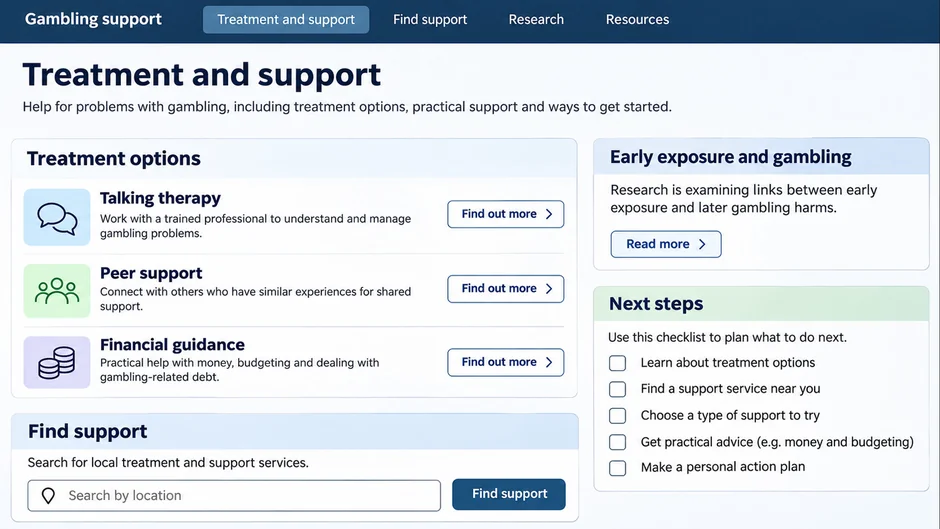
Good family support is also important. Recovery from gambling addiction is seldom linear, and people often have greater resources to draw upon if they receive professional assistance and also benefit from a supportive domestic environment. Within the United States, the National Council on Problem Gambling provides a confidential telephone and text service (1-800-MY-RESET) which links people to local support services. In addition, health professionals providing CBT or motivational interviewing can be a source of support. General practitioners can also refer patients to health care professionals with specialist knowledge of behavioral addiction therapy.
| Signal | Where support can start |
|---|---|
| 📉 Repeated, uncontrolled losses of money | Financial counseling alongside a mental health provider |
| 😰 Anxiety, low mood, or sleep problems | Evaluation by a physician or therapist |
| 🚪 Gambling to escape stress or conflict | Therapy focused on coping skills, such as CBT |
| 📵 Concealing gambling from family | Family therapy or peer support groups |
| 📞 Urges that feel unmanageable | Confidential helpline: call or text 1-800-MY-RESET |
This pairing is a starting point for conversations, not a diagnostic instrument.
What recent research shows about early exposure
How well-versed are American adults in relation to gambling? The National Council on Problem Gambling published the results of a national survey, undertaken by Harris Poll on behalf of the organization, investigating the extent to which people gambled before they reached the age of 21. Of those aged 21 and above, 65% stated that they had engaged in at least one type of gambling behavior prior to the age of 21.
Although this data relates to self-reported behavior, it does not indicate how widespread gambling addiction is. Primarily, it is useful as it demonstrates that for most American adults, gambling is an established aspect of life. Consequently, it is important that easily accessible information is available regarding how to recognize and then access support for gambling-related issues. In addition, by highlighting that even widely known behaviors can sometimes have negative impacts, this information also helps to reduce stigma.
Frequently asked questions
Can vitamins cure gambling addiction?
No. Although vitamins and minerals are important for good health, there is no nutritional element which can be used to treat gambling addiction. Recovery is generally achieved via a combination of professional therapeutic intervention (for example, CBT), family support and access to support services such as the 1-800-MY-RESET helpline. Addressing a confirmed nutritional deficiency can, however, enhance general health.
How do I know if I have a nutrient deficiency?
Without medical investigation, it is not possible to be confident about this. As previously mentioned, symptoms of nutritional deficiency can be shared by many different conditions. A health professional can examine a person’s medical history and then determine whether blood tests are suitable. Results are analyzed by a physician who has access to a patient’s complete medical information in the United States. Self-medicating with high-level supplements based solely on perceived symptoms can pose health risks. In addition, supplements can interact with medication.
Where can someone in the United States find help for gambling problems?
The National Council on Problem Gambling provides a confidential telephone and text service (1-800-MY-RESET) which links people to local support. In addition, health professionals offering CBT or motivational interviewing can provide support. General practitioners can also refer people to health care professionals with specialist knowledge of behavioral addiction therapy.